
mail
editor@ajptr.com
whatsapp
9409046853
logo

American Journal of PharmTech Research

📢 Latest Update: New special issue call for papers on "Emerging Technologies in Research" - Submit by March 31, 2025

📢 Latest Update: New special issue call for papers on "Emerging Technologies in Research" - Submit by March 31, 2025

December 2023 Issue 6

Volume 13, Issue 6 - $2023

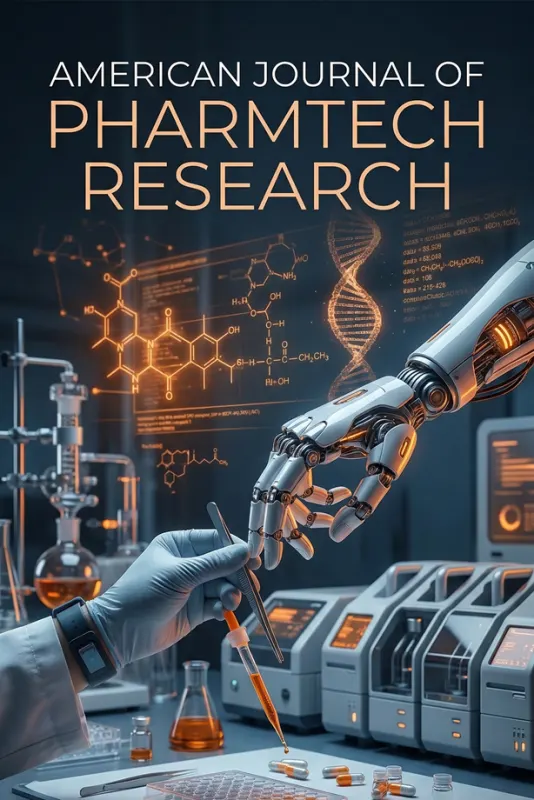
Volume 13 Issue 6 Cover

Issue Details:

Volume 13 Issue 6
Published:Invalid Date

Editorial: December 2023 Issue 6

Welcome to the 2023 issue of American Journal of PharmTech Research. This issue showcases the remarkable breadth and depth of contemporary research across multiple disciplines. From cutting-edge applications of machine learning in climate science to the revolutionary potential of quantum computing in drug discovery, our featured articles demonstrate the power of interdisciplinary collaboration in addressing global challenges.

We are particularly excited to present research that bridges traditional academic boundaries, reflecting our journal's commitment to fostering innovation through cross-disciplinary dialogue. The integration of artificial intelligence with environmental science, the application of blockchain technology to supply chain management, and the convergence of urban planning with smart city technologies exemplify the transformative potential of collaborative research.

As we continue to navigate an era of rapid technological advancement and global challenges, the research presented in this issue offers both insights and solutions that will shape our future. We thank our authors, reviewers, and editorial board members for their continued dedication to advancing knowledge and promoting scientific excellence.

Dr Hemangi J Patel
Editor-in-Chief
American Journal of PharmTech Research

Articles in This Issue

Showing 6 of 6 articles
Research PaperID: AJPTR136001

A Scenario from India Relating To Various Aspects of Biomedical Waste Management in the Wake of Covid-19

Abdul Aalim Usta, Imran Khan Pathan

India, with the second-largest population globally after China, and one of the worst-hit countries by the COVID-19 pandemic, is facing significant challenges due to its poorly managed biomedical waste system. The lack of public awareness and resources is exacerbating the problem, putting hospital personnel, physicians, nurses, patients, and visitors at risk of exposure to biomedical waste. Proper training for those handling and managing biomedical waste is critical in preventing further virus transmission. Inadequate treatment and management of BMW can result in contamination of soil, air, and water, which can lead to the transmission of diseases and various health issues. India has seen a 25% increase in daily biomedical waste generation in 2020 as a result of COVID-19. As a result, new guidelines and strategies are being implemented by various countries to safely manage the increased amounts of biomedical waste, including COVID-19 waste. A step towards regulating and controlling BMW activities in the nation was taken with the implementation of the BMW management rules 2016 and the amendment Rules 2019. To stop the COVID-19 pandemic from spreading and to safeguard the security of medical staff, patients, and the general public, efficient biomedical waste management is essential.

Biomedical wasteCOVID-19 WasteCPCB (The Central Pollution Control Board)SPCBs (State Pollution Control Boards)PCCs (Pollution Control Committees)ULBs (Urban Local Bodies)+3 more
337,705 views
101,415 downloads

Contributors:

 Abdul Aalim Usta
,
 Imran Khan Pathan
Research PaperID: AJPTR136002

A Comprehensive Review of Therapeutic Applications of Monoclonal Antibodies and Their Future Prospects

Abdul Haseeb TS, Fatimah. Abushoumi, Zakariya Al Dobayan, Fuad AL-Ghamdi

In 1975, Georges Kohler of West Germany and Cesar Milstein of Argentina discovered how to produce monoclonal antibodies (MAbs) utilizing hybridoma technology. Since the US Food and Drug Administration (US FDA) approved the first monoclonal antibody in 1986, more than three decades have passed, and a significant advancement in antibody engineering has been made. Marketing approval has been given to over 100 mAbs so far. Although MAb therapies are mostly used to treat cancer and immunological/infectious illnesses, they are also being used to treat other types of diseases like arthritis and other conditions brought on by organ transplantation and have many uses in applied biology, biotechnology, and biochemistry. MAbs have more uses today than ever before, according to research being conducted in labs all over the world. It is anticipated that the therapeutic pipeline will continue to include the several monoclonal antibodies that are now in research due to their distinct characteristics. Therapeutic monoclonal antibodies have drawn a lot more attention in recent years. The development of a new generation of therapeutic drugs is made possible by the advent of molecular targeting medicine. Their extremely specific target of antigens can result in very successful medical treatment. This review examines cutting-edge technology relevant to the future prospects of MAbs and highlights the therapeutic applications of MAbs.

monoclonal antibodiesUS Food and Drug Administrationimmunological/infectious illnessesmolecular targeting medicinetherapeutic applications.
337,599 views
101,402 downloads

Contributors:

 Abdul Haseeb TS
,
 Fatimah. Abushoumi
,
 Zakariya Al Dobayan
,
 Fuad AL-Ghamdi
Research PaperID: AJPTR136003

Determination of Manganese in Albizia Plant Samples Using 4-Amino antipyrene-3, 5- Di amino benzoic acid (AAPDAB) By Spectrophotometric Method

Y. Paul Raj, P. Srujana, V. Ramaraju, and T. Shobha Rani

A new technique has been devised to find tiny quantities of manganese (II). For the spectrophotometric detection of manganese, the 4-Amino antipyrine -3, 5-diaminobenzoic acid (AAPDAB) has been proposed as a new analytical reagent. The color responses happen instantly, and for more than five hours, the greatest absorbance was found at 390 nm. The pH range from 3 to 5 is where complex formation is seen. Metal and ligand were obtained in a 1:1 (M: L) composition using the Molar ratio relationship and the Job's approach. The calibration graph had a limit of detection (LOD) of 0.15 g ml-1 and was linear in the range A390 = 0.27577 - 0.00765. In the Mn (II) concentration range of 0.126–2.628 g/ml, the system complies with Beer's law. The AAPDAB method was used to determine the presence of manganese in some plant samples since it is more sensitive.  The AAPDAB was discovered to have a molar absorptivity of 6.35 X 10³ L mol-1cm-1 and a Sandell's sensitivity of 0.00157 g/ml g cm-2 of Mn (II). Manganese (II) levels in environmental plant samples have been successfully determined using the approach, with satisfactory results.

SpectrophotometryManganese determinationAAPDAB reagentplant samples.
337,938 views
101,447 downloads

Contributors:

 Y. Paul Raj
,
 P. Srujana
,
 V. Ramaraju
,
 and T. Shobha Rani
Research PaperID: AJPTR136004

Development and Characterization of Nicotinic acid Extended Release Tablets with Hydrophobic Polymer

Himankar Baishya, Naresh Kalra

Nicotinic acid is widely used since long period of time as antihyperlipidemic agent in extended release tablet dosage form with high dose. It is rapidly absorbed in GI tract and undergo extensive metabolism. This leads to high variable plasma drug concentration, which may correlate with the side effects of Nicotinic acid. Available marketed formulation shows good correlation of in-vitro dissolution profile; however in-vivo performance of the formulation shows highly variable plasma concentrations. Available marketed formulation is designed with hydrophilic polymer (HPMC). This erratic in-vivo behaviour of the available marketed formulation may be due to the variability in physiological pH or impact of mobility and composition and volume of GI liquids. Here we worked on the composition as a factor and new formulation is designed with insoluble polymer. This current research is aimed to design a robust matrix tablet with insoluble polymer.

Inter-subject VariabilityHydrophilic PolymerHydrophobic PolymerAntihyperlipidemic agentMatrix Tablet
337,851 views
101,529 downloads

Contributors:

 Himankar Baishya
,
 Naresh Kalra
Research PaperID: AJPTR136005

A Pharmaceutical and Analytical study of ‘Gomutra Arka’

Aparna Kulkarni, Yoginee Patil

ABSTRACT: Ayurveda has achieved its proper position at international level & set up with weapons to solve many critical problems of human being. Different formulation methodologies prepared with various herbs & their administrations are collectively discussed in Bhaishajya Kalpana. Five basic methodologies called Panchavidh Kashay Kalpana are stated. Though these kalpanas are effective posses some limitations regarding taste, smell & shelf-life. So some derived formulations are designed by acharya based mainly on extraction of active ingredient. The term Arka used for the procedure indicates that it is the most applicable and potent formulation. While doing pharmaceutical preparations it is observed that some drugs having volatile constituents as active principles, loose their potency after boiling to obtain such volatile aromatic content, Arka Kalpana is developed. The Arka kalpana described in Vedas(1) can be traced in the form of liquors and named as ‘Parisruta’. Parisruta is the alcoholic preparation made by the process of distillation. Arka Prakash the special text describing Arka stated isolation of arka not only from herbs & flowers but also from substances belonging to animal kingdom. In this thesis pharmaceutical preparation of Gomutra Arka is done by using domestic cooker as well as simple distillation apparatus. Open pan evaporation of Gomutra was also done to rule out the time required & temperature consumed. Cooker method arka preparation was done as pilot study. Based on the values obtained, groups of experiments changing initial quantity of raw material & keeping time & temperature constant & vice versa was done. Composition of Gomutra & it's utility is very well known today, but its dispersion has some limits due to smell, taste, availability of proper sources. So Gomutra Arka was prepared and studied analytically in terms of organoleptic test & chemical analysis was also done. Keyword: Gomutra, Arka kalpana, Gomutra Arka

GomutraArka kalpanaGomutra Arka
338,328 views
101,558 downloads

Contributors:

 Aparna Kulkarni
,
 Yoginee Patil
Research PaperID: AJPTR136006

Machine Learning In Pharmacotherapeutics

ObbuKavya, P. VeereshBabu

Machine learning is a branch of artificial intelligence that deals with and focuses on algorithms, improving their accuracy through the collection of data, resembling human intelligence. Machine learning has been developed since its inception. It has become a vital resource in human resources as well. Nowadays, machine learning is not only used in technical and engineering fields but also in the medical field. It is employed in healthcare, treatment, drug discovery, and drug development, among other applications. Pharmacotherapeutics pertains to the use of drugs for prevention, treatment, diagnosis, and modification of normal functions. Machine learning has become imperative in the medical field, healthcare, drug discovery, and development. It is used in the development of a drug by creating a lead molecule and determining its effects on the body through technical methods. Machine learning is utilized in diagnostics, such as during EEG, ECG, MRI, CT scans, and many other diagnostic procedures. It is employed in clinical pharmacology where humans are used to measure drug effects. In academic practices for pharmacology subjects, software is used to calculate doses and conduct experiments technically, as it is prohibited to harm animals under PCI guidelines. Machine learning in pharmacotherapeutics plays a significant role in the medical field, aiding in drug discovery, drug development, diagnosis, and disease treatment. It is used in neural networks of artificial intelligence, where input and output act as neurons, contributing to the treatment of various diseases and disorders. In this manner, machine learning holds a distinct and vital role in pharmacotherapeutics.  

Machine learningArtificial intelligenceAlgorithmsDiagnosisDrug discoveryDrug development+1 more
338,466 views
101,490 downloads

Contributors:

 ObbuKavya
,
 P. VeereshBabu
Whatsapp